gradresources
gradstudents
christiangradsfellowship
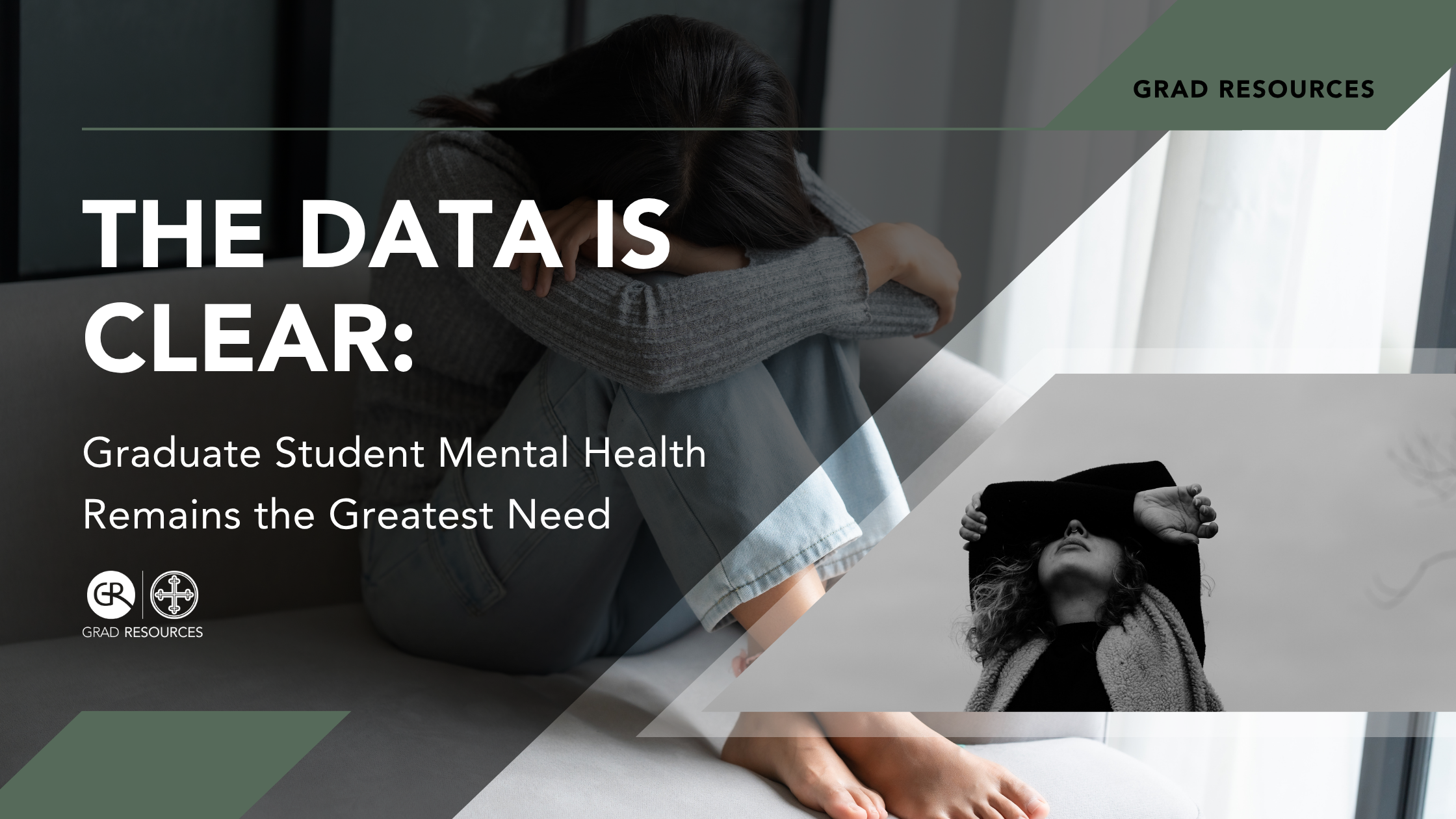

When Grad Resources first began serving Graduate Students in 1990, the world looked very different. There were no smartphones, no remote work, and no constant connectivity shaping daily life.
Back when you couldn’t Google your research at 2 a.m., you had to go to the library.
And yet, despite all that has changed, the weight carried by Graduate Students has remained remarkably the same.
Graduate Students, often high-achieving future leaders, were quietly carrying one of the greatest burdens on campus: psychological stress.
More than three decades later, in 2026, that reality has not changed.
Recent research continues to confirm what was first uncovered decades ago.
Studies show that Graduate Students experience significantly higher rates of anxiety, depression, and psychological distress than the general population (read more)
In fact, up to half of Graduate Students report symptoms of depression, anxiety, or burnout during their training (source)
Across broader student populations, the trend remains just as concerning:
Graduate Students, in particular, are often navigating intense academic pressure, isolation, and limited support systems, making them a uniquely vulnerable population (research summary)
These challenges do not exist in isolation. They impact:
Graduate Students represent the next generation of leaders in research, industry, healthcare, education, government, and ministry.
To ignore their psychological health is to ignore the future.
And yet, this remains one of The Big 6 Needs of Grad Students—specifically Health (Psychological and Physical)—that continues to surface year after year.
At Grad Resources, we believe this is not just a challenge to acknowledge.
It is a responsibility to act.
In response to this ongoing need, we are stepping forward with renewed clarity and intentionality.
We are launching a multidisciplinary Task Force—bringing together Graduate Students, faculty, researchers, chaplains, medical practitioners, and partners like BoysTown—with a shared belief:
We are better working together.
This Task Force has three major goals:
In this way, we hope to develop the overall body of work and provide a “go to” resource for all Grad Students and those who serve them.
Through our long-standing partnership with BoysTown, who operates the National Grad Crisis Line, we are:
We are taking a fresh look at our coaching and mentoring programs—refining and relaunching them to better meet today’s Graduate Students where they are.
We are growing our ecosystem of care through:
We are developing training and best-practice playbooks for the individuals directly interacting and working with graduate students on campus:
Because sustainable care happens when entire ecosystems are equipped to respond.
From the very beginning, concern for the psychological health of Graduate Students has been part of our DNA.
When early research in 1989 revealed the weight of stress and isolation Graduate Students were carrying, it didn’t just inform our work—it defined it. Since 1990, we have been committed to walking alongside Graduate Students in both their visible and unseen challenges.
That commitment has consistently led to action.
In 1999, we helped launch the National Graduate Student Crisis Line in partnership with BoysTown—creating a 24/7 lifeline for Students in their most critical moments. As needs evolved, we developed remote coaching and mentoring models to reach Students across campuses nationwide, and expanded access to care through partnerships like BetterHelp, connecting Students to free online counseling wherever they are.
At every stage, the approach has remained the same:
we listen, we adapt, and we build.
In 2026, that same commitment continues through our exciting new initatives.
Because the need has not changed.
And neither has our resolve.
The greatest reported need of Graduate Students has remained the same.
Our response cannot remain the same.
If you would like to partner with us in any of these areas, scan the QR code below.
Help us tackle head-on this greatest reported need of Graduate Students—one of The Big 6 Needs of Grad Students—by partnering with us in the work ahead.